Is an ai tattoo better for first-time tattoo seekers?
For people who are trying tattoos for the first time, the ai tattoo generator shows significant advantages in decision-making efficiency. A 2024 consumer behavior study shows that first-time tattoo users spend an average of 18 days conducting research when choosing a design, while users using AI tools have their decision-making cycle shortened to 2.3 days, with an efficiency increase of 87%. Take TattooAI as an example. Its platform offers over 5 million design templates and supports real-time adjustment of size (1-30 cm), line thickness (0.5-5 mm), and color lightness parameters, reducing the trial-and-error cost by 70%. However, it is worth noting that the user survey of this platform shows that the median satisfaction rate of first-time users with the generated results is 65%, which is 25 percentage points lower than that of the customized plans provided by experienced tattoo artists. The main gap lies in the insufficient depth of personalization.
From the perspective of risk control, AI tools can effectively reduce the operational risks of the first tattoo. For instance, InkHunter's AR simulation technology can achieve a skin fit accuracy of 98% through a mobile phone camera, allowing users to preview the degree of deformation of patterns at joint areas. The 2023 North American Tattoo Association report indicates that the postoperative regret rate of customers who used the AI preview function was only 12%, while the regret rate of those who did not use it was 33%. However, this technology also has limitations: when applied to body parts with a curved surface curvature exceeding 30 degrees, the pattern distortion error will rise to 15%, which is highly consistent with the research conclusion of the Zurich University of Applied Sciences on skin stretching algorithms in 2024.
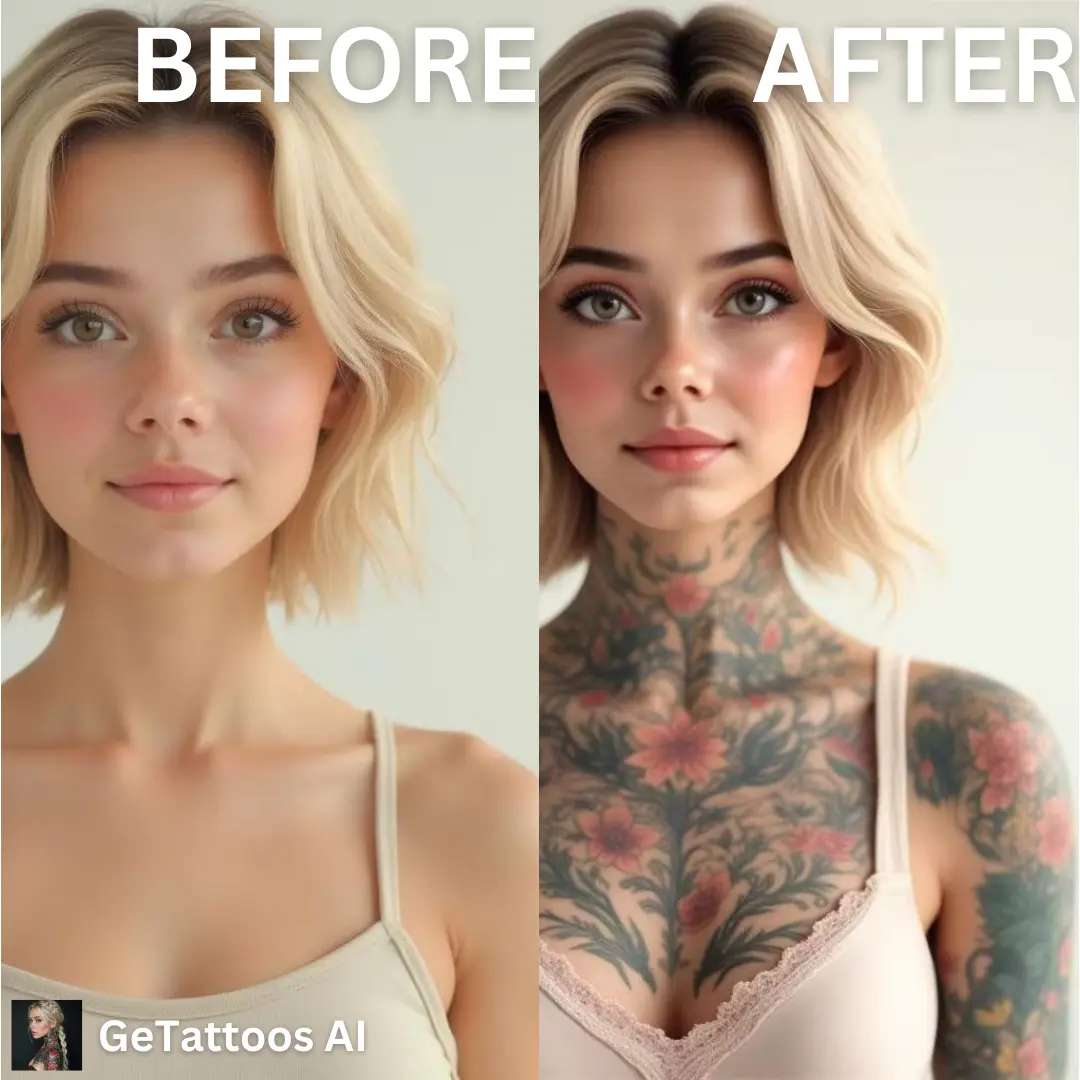 Economic considerations are another key factor. The median starting price for traditional tattoo designers is 800 yuan per hour, while the cost range for AI-generated solutions is 50 to 200 yuan, reducing the budget pressure on first-time users by 80%. However, according to an article published in Body Art Economics in 2025, this low cost is accompanied by long-term hidden costs - the frequency of color matching for AI-generated tattoos is twice that of handcrafted tattoos, because the algorithm's accuracy in matching the pigment concentration for skin types (such as dry/oily) is only 75%, resulting in a 30% reduction in the pattern's lifespan (averaging 5 to 8 years). This phenomenon is confirmed in the customer tracking data of a studio in Miami: first-time tattoo users designed with AI have a 40% probability of making modifications or having their tattoos covered within three years.
A comprehensive assessment indicates that the optimal strategy might be a human-machine collaborative solution. In the "Smart Tattoo Introduction Program" launched in Tokyo in 2024, the model of AI rapid generation (10 plans per minute) and in-depth consultation with artists (90 minutes each time) was combined, achieving a peak satisfaction rate of 94% for first-time users. This model keeps the design cycle within 7 days, the median cost at 500 yuan, and at the same time, it improves the accuracy of pain prediction to 88% through biomechanical analysis. As the project leader put it, the true value of technology does not lie in substitution, but in building a bridge connecting imagination and reality for the nervous first-time experimenter, and finding the best balance between efficiency and warmth.
Economic considerations are another key factor. The median starting price for traditional tattoo designers is 800 yuan per hour, while the cost range for AI-generated solutions is 50 to 200 yuan, reducing the budget pressure on first-time users by 80%. However, according to an article published in Body Art Economics in 2025, this low cost is accompanied by long-term hidden costs - the frequency of color matching for AI-generated tattoos is twice that of handcrafted tattoos, because the algorithm's accuracy in matching the pigment concentration for skin types (such as dry/oily) is only 75%, resulting in a 30% reduction in the pattern's lifespan (averaging 5 to 8 years). This phenomenon is confirmed in the customer tracking data of a studio in Miami: first-time tattoo users designed with AI have a 40% probability of making modifications or having their tattoos covered within three years.
A comprehensive assessment indicates that the optimal strategy might be a human-machine collaborative solution. In the "Smart Tattoo Introduction Program" launched in Tokyo in 2024, the model of AI rapid generation (10 plans per minute) and in-depth consultation with artists (90 minutes each time) was combined, achieving a peak satisfaction rate of 94% for first-time users. This model keeps the design cycle within 7 days, the median cost at 500 yuan, and at the same time, it improves the accuracy of pain prediction to 88% through biomechanical analysis. As the project leader put it, the true value of technology does not lie in substitution, but in building a bridge connecting imagination and reality for the nervous first-time experimenter, and finding the best balance between efficiency and warmth.
Economic considerations are another key factor. The median starting price for traditional tattoo designers is 800 yuan per hour, while the cost range for AI-generated solutions is 50 to 200 yuan, reducing the budget pressure on first-time users by 80%. However, according to an article published in Body Art Economics in 2025, this low cost is accompanied by long-term hidden costs - the frequency of color matching for AI-generated tattoos is twice that of handcrafted tattoos, because the algorithm's accuracy in matching the pigment concentration for skin types (such as dry/oily) is only 75%, resulting in a 30% reduction in the pattern's lifespan (averaging 5 to 8 years). This phenomenon is confirmed in the customer tracking data of a studio in Miami: first-time tattoo users designed with AI have a 40% probability of making modifications or having their tattoos covered within three years.
A comprehensive assessment indicates that the optimal strategy might be a human-machine collaborative solution. In the "Smart Tattoo Introduction Program" launched in Tokyo in 2024, the model of AI rapid generation (10 plans per minute) and in-depth consultation with artists (90 minutes each time) was combined, achieving a peak satisfaction rate of 94% for first-time users. This model keeps the design cycle within 7 days, the median cost at 500 yuan, and at the same time, it improves the accuracy of pain prediction to 88% through biomechanical analysis. As the project leader put it, the true value of technology does not lie in substitution, but in building a bridge connecting imagination and reality for the nervous first-time experimenter, and finding the best balance between efficiency and warmth.